
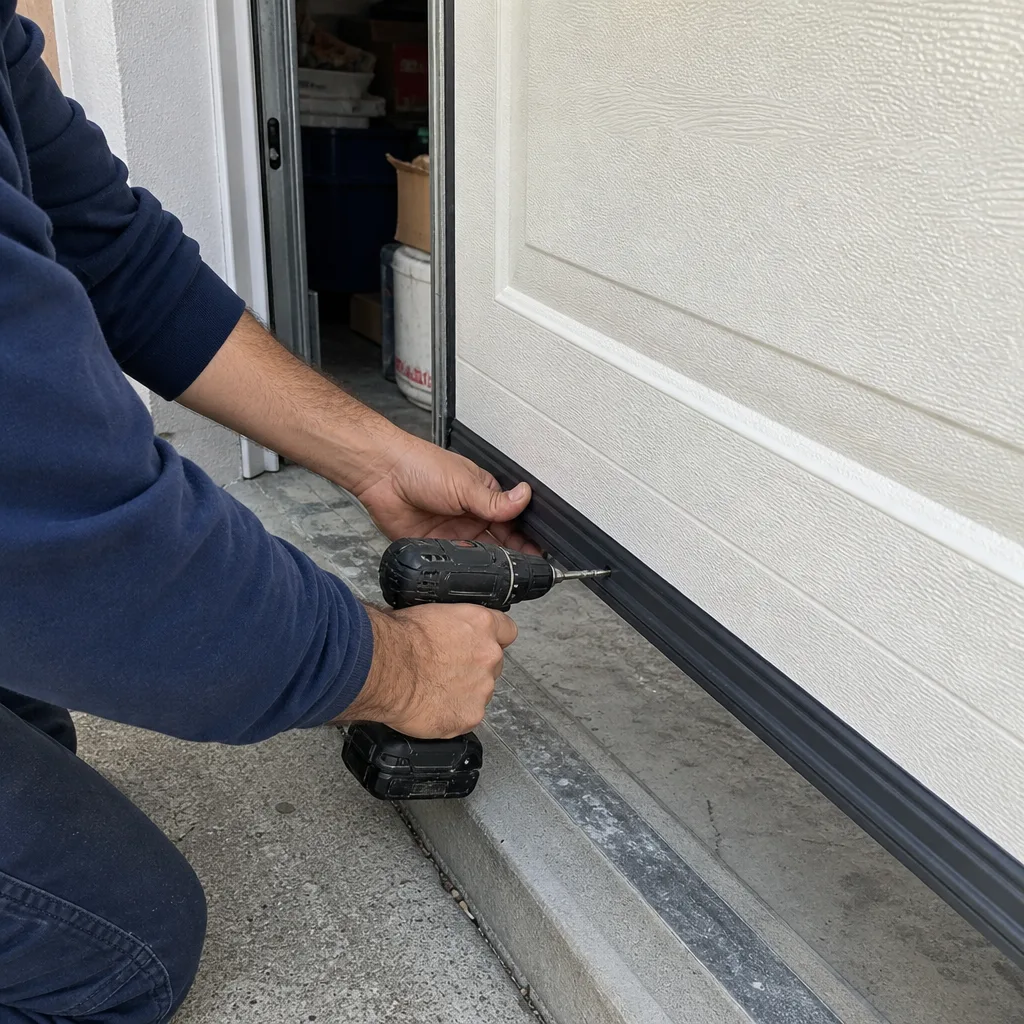
Last updated November 16, 2026
 Raised-panel steel
 Carriage house
 Modern flush
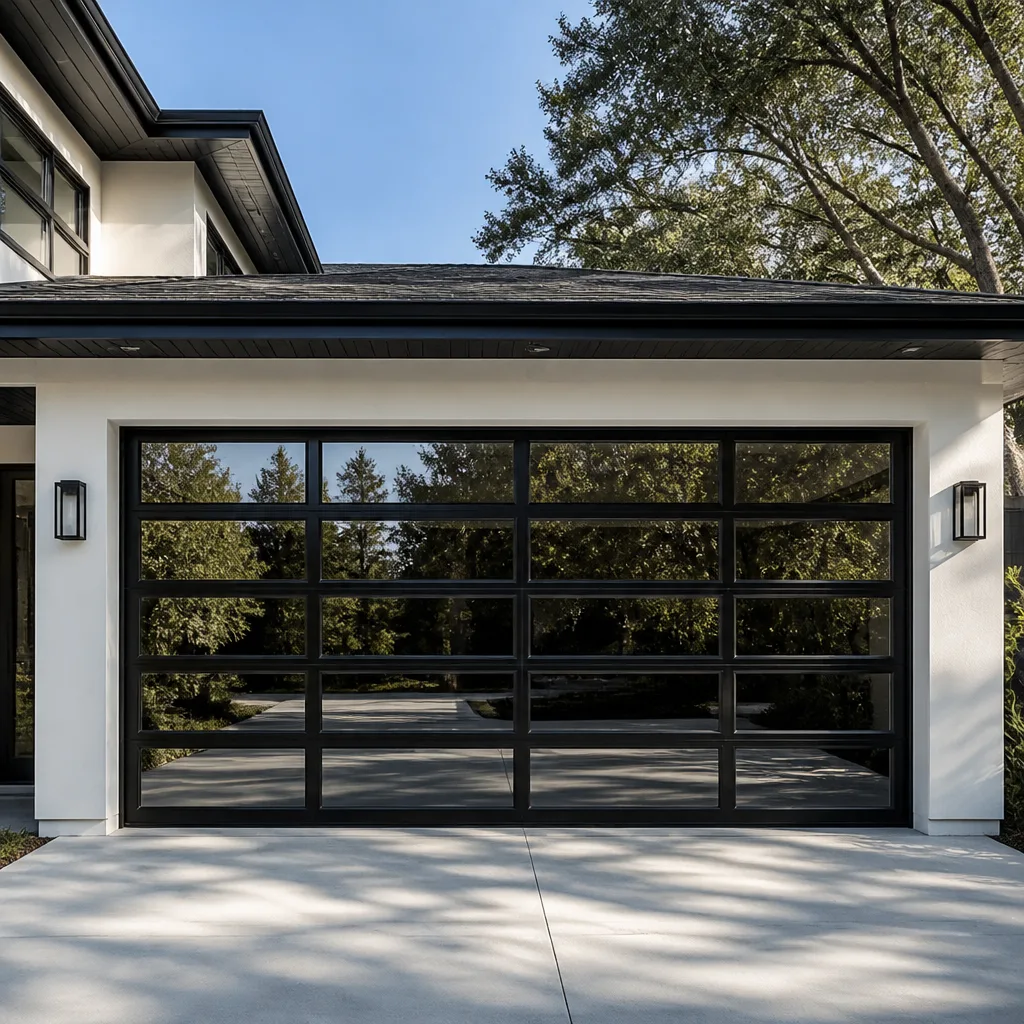 Full-view glass
 LiftMaster openers
 Chamberlain openers
Full 25-point door and opener safety check with every visit - springs, cables, rollers, tracks, and your LiftMaster or Chamberlain opener included
You get a price before we start. It does not change when the pro arrives.
Get your free estimateGarage Door Repair Maintenance Schedule: What to Do and When
Most maintenance advice for garage doors is built on a calendar that has nothing to do with the door. A quarterly reminder to “check your garage door” doesn’t tell you what you’re checking for, and it doesn’t tell you why any of it matters. The task that prevents the most expensive repair we see isn’t a quarterly one at all – it’s a ten-minute cable inspection that most schedules skip entirely. A cable that starts to fray and is caught early is a simple cable swap. Left alone, that same cable can jump a drum, drop the door, and turn a routine service call into a spring-and-cable overhaul. This guide ties every maintenance task to the specific wear mechanism it prevents, times the schedule to Vacaville’s climate, and gives you lifespan benchmarks so you know when maintenance is still buying you time and when it isn’t.
Quick Answer
A working garage door maintenance schedule has four rhythms: a ten-minute monthly inspection (cables, rollers, door balance, reversal test), lubrication every three to four months with heavier spring lubrication before summer, a full balance and tension check each fall before cold mornings, and a professional service visit once a year. The three things that override any schedule and call for an immediate professional look are visible cable fraying, any asymmetry in how the door sits in its frame, and an opener motor that runs noticeably longer to complete a cycle than it used to.
Styles & brands we work with
- Raised-panel steel
- Carriage house
- Modern flush
- Full-view glass
- LiftMaster openers
- Chamberlain openers
Table of Contents
- Why Maintenance Is Task-to-Wear, Not Task-to-Calendar
- The Monthly Ten-Minute Inspection
- Lubrication: What Goes Where, and How Often
- Seasonal Timing for Vacaville’s Climate
- The Three Triggers That Override the Schedule
- Lifespan Benchmarks: Maintaining vs. Delaying Replacement
- Opener-Side Maintenance Most Guides Skip
- The Maintenance Log: Why to Keep One
Why Maintenance Is Task-to-Wear, Not Task-to-Calendar
A garage door is a machine with about a dozen moving components, and each one fails in a different way over a different timeline. A generic schedule treats them all the same. That’s the mistake. Lubricating your rollers isn’t really about stopping the squeak you hear from the driveway – squeaking is a symptom. The real job is preventing the flat spot that develops when a roller seizes and drags. Once a roller has a flat spot, it no longer rolls smoothly in the track, the door starts to shudder as it moves, and that shudder transfers stress to the hinges, the cables, and eventually the springs. The squeak was the warning. The flat spot is the damage.
Every maintenance task on a good schedule maps to a wear mechanism like that. Tracking a spring’s stretch and wear prevents the fatigue that leads to a snap. Checking the door’s balance prevents the opener from working harder than it was built to. Wiping the tracks down and inspecting them prevents the misalignment that makes rollers bind. Fall tension checks prevent the confusion that comes from a door that suddenly feels heavy on a cold morning.
That’s why the schedule below is organized by component and wear type, not by a seasonally neutral reminder. Whether the door on your house in Vacaville is a steel Clopay or a wood-look Amarr, the wear mechanisms are the same. What changes is the timing, and here the local climate does most of the talking.
One more point on the calendar. If your door has a lift specification printed on the manufacturer’s label or on the opener’s manual, use it. Many openers today carry a lift rating in pounds, and knowing yours makes it much easier to spot a door that’s working harder than it should. That number and your maintenance log are the two most useful pieces of paper you can keep for a garage door.
The Monthly Ten-Minute Inspection
The monthly inspection isn’t a maintenance task in the traditional sense – nothing gets adjusted or replaced. It’s a diagnostic pass. Ten minutes, no tools except maybe a flashlight, and you’re looking for the early signs that something is wearing faster than it should. This is the single rhythm that catches most problems while they’re still cheap to fix.
Here’s the walkthrough, in order:
- Look at the cables from a safe distance. Never touch a cable under tension. Stand to the side and look at each cable for frayed strands, kinks, or rust where the cable meets the drum. A cable should be smooth and unpitted from end to end.
- Check the door’s alignment in the frame. With the door closed, step back and look at the gap on each side. The gaps on the left and right should be roughly equal. If the door sits crooked by more than a small fraction, that’s a signal to investigate, not something to leave for later.
- Test the balance. With the door closed, pull the opener’s emergency release (only with the door closed, and only if you know you can safely re-engage it). Lift the door by hand to about halfway and let go. A balanced door should hold roughly where you left it. If it drops quickly, the springs are losing tension. If it rises on its own, they may be over-tensioned.
- Run the reversal test. Put a small object – a scrap of wood about an inch tall or a roll of paper towels – on the floor beneath the door and press the close button. The door should reverse when it contacts the object.
- Watch the roller travel. With the door in motion, watch the rollers as they move through the track. They should roll smoothly. Any that slide, bind, or wobble are candidates for replacement.
- Listen to the opener. A healthy opener completes a cycle at a steady rhythm. If the motor strains, lags, or runs noticeably longer than it used to, that’s the third of our override triggers (more on that below).
Do this once a month in Vacaville and you’ll catch most wear cycles before they compound. It’s also a good habit to run through with the door in a different position from the last time – if your last check was with the door closed, do this one with it open. Wear shows in different places depending on where the door is loaded.
Lubrication: What Goes Where, and How Often
Lubrication is where most DIY schedules go wrong in one of two directions: too little, or the wrong product in the wrong place. A garage door isn’t a bicycle chain. Different components need different treatment, and some parts should never see lubrication at all.
As a general rhythm, the working parts want lubrication every three to four months. Here’s the breakdown:
- Rollers: A drop of garage-door-rated lubricant on the roller bearings – not on the roller’s outer surface – keeps them rolling instead of sliding. Rollers that slide develop flat spots. Use a light, non-gumming product, not thick grease.
- Hinges: A small amount of lubricant at each hinge’s pivot points. Don’t soak them – a light film is enough.
- Springs: This one is worth its own schedule. Springs are under tremendous tension, and the coils need a light coat to prevent rust and reduce friction between coils as they stretch and contract. Spray a proper garage-door spring lubricant lightly across the coils. The springs are a component you must never touch while tensioned, so lubricating them means spraying from a distance, not handling them.
- Tracks: Don’t lubricate the tracks themselves. Lubricant on a track collects dust and debris and makes rollers slide rather than roll. Wipe them clean with a dry cloth instead.
- Photo-eye lenses: Wipe the lenses clean with a soft cloth. These are the two little sensors at the bottom of the tracks – dust on them can cause phantom reversing.
Two safety notes matter here, and they’re the ones most guides leave out. First, never fully wind or unwind a torsion spring yourself. Those springs store enough energy to do serious injury, and adjusting them is a job for a trained technician. Second, never lubricate the rollers with WD-40-style penetrants – they’re too thin and evaporate. Use a dedicated garage door lubricant. If you’re not sure what’s already been used on your door, don’t mix products – clean the rollers first or ask a technician to do a proper lube service.
If your garage door opener is a Genie or a LiftMaster with a belt or chain drive, that drive needs its own lubrication at the intervals in the opener manual. Which brings us to the seasonal timing.
Seasonal Timing for Vacaville’s Climate
Vacaville’s climate shapes maintenance timing in ways a generic national guide can’t capture. Summers here are hot and dry. Winters are mild – no snow, no hard freeze, no ice. That combination doesn’t mean “less maintenance.” It means maintenance is weighted differently across the year.
Spring: This is the best time to do heavy spring lubrication and a thorough roller and hinge check. Doing the spring lubrication before the summer heat settles in does two jobs: it protects the coils from rust during the driest stretch, and it reduces the friction that builds as the metal expands through hot afternoons. Doors in Vacaville track hotter in summer than the numbers on a chart suggest, and the coil friction that comes with that heat is exactly what a spring lube is for.
Fall: This is when the door’s balance and spring tension deserve a full check. Cold mornings mean contraction – the cables, the springs, the metal track all pull slightly tighter as the air cools. That contraction is why a door that felt fine in August can suddenly feel heavy on a January morning. The problem often isn’t the door. It’s the opener working harder against a slightly stiffer mechanism, and it’s easy to misread as a failing opener. Check the balance in the fall, not in the dead of winter, so you’re testing the door when the contractor’s numbers are still in your favor.
Summer and winter: These are the months for the routine monthly inspections and lubrication top-ups. Nothing heavy. Just keep the habit going.
One local wrinkle worth knowing: the dry season here kicks up fine dust, and dust settles on the tracks and in the roller bearings. That’s why wiping the tracks with a dry cloth is a monthly task rather than a quarterly one in Vacaville. The dust is harmless in itself, but it becomes abrasive when it gets inside a bearing. If you’re storing things in a garage that also vents to the outside, the tracks will collect more than you think.
The Three Triggers That Override the Schedule
A schedule is a baseline, not a rule. Three specific conditions mean “stop waiting and get it looked at,” regardless of where you are in the maintenance cycle. They’re all things a homeowner can spot without tools.
1. Visible cable fraying
Any visible fraying, kinking, or rust on a cable is a stop-now signal. Cables don’t fail gradually in a safe way – a frayed cable is a weakened cable, and the failure mode is a sudden snap that takes the door down. Look at the cable, not the door, when you check. A cable with a single broken strand visible somewhere along its length is a cable that’s due for replacement, not repair. Never attempt to adjust or replace a cable yourself. That’s a job for a trained technician, and it’s one of the reasons we recommend a professional service visit once a year.
We also can’t say this strongly enough: high-tension springs, cables, and their drums are the most dangerous parts of a garage door. If you suspect a cable or spring problem, stop operating the door and call a professional. The replacement cost for a cable is minor compared to the risk of an injury or a door falling on a car.
2. Any asymmetry in how the door sits
A door that’s visibly crooked in the frame – one side higher than the other, one gap wider than the other – is a door whose lifting mechanism is out of balance. That can be a stretched spring, a slipping cable, or a track that’s been knocked out of true. The asymmetry is your sign. Don’t run the opener until it’s been checked. Running an unbalanced door strains the opener’s motor, and it’s the fastest way to turn a mechanical repair into an opener repair too.
3. The opener motor running longer than usual
You know how long your opener usually takes to lift the door. When that time stretches out – the motor whines a little longer, strains a little harder – the door is working against something it didn’t used to. It could be a stiff spring, a binding roller, a misaligned track, or a failing opener. The opener is telling you it’s compensating for something. Get it diagnosed before the extra work becomes the reason the opener fails.
Any of the three, and you go straight to a professional inspection – not the quarterly calendar, not the monthly walkthrough. The schedule is there for the days nothing’s wrong.
Lifespan Benchmarks: Maintaining vs. Delaying Replacement
Maintenance buys you time, but no maintenance schedule makes a part last forever. Knowing the service life of each component tells you when you’re still buying time and when you’re just delaying the replacement that’s coming anyway. Here’s how the numbers work.
A torsion spring is typically rated at about 10,000 cycles. One cycle is one open-and-close. For a typical household – leaving once in the morning and coming home at night – that’s around four cycles per day, roughly 1,460 a year. Ten thousand cycles works out to something in the range of seven years of service, sometimes longer, sometimes shorter, depending on how much the door is used. A family that runs the door more often, or a door that’s larger and heavier, shortens that. So when a spring fails at the seven- or eight-year mark, it isn’t a sign that maintenance failed. It’s a sign the spring reached its rated life. Replacing both springs as a matched pair is the standard advice there, because if one has hit its limit, the other is days or weeks behind it.
Here’s the component-lifespan picture:
- Torsion springs: About 10,000 cycles as a typical rating.
- Rollers: Around 20,000 cycles – roughly twice the spring’s life, which is why rollers are often replaced in pairs or sets alongside springs. Nylon rollers typically outlast steel.
- Hinges: Twenty to forty thousand cycles for standard residential hinges; they fail more slowly and often show as squeaks and wobbles before they break.
- Cables: No fixed cycle rating, but they typically last as long as the springs and should be inspected monthly.
- Photo-eyes, opener motors: More variable, which is why an annual professional check matters – these fail quietly, and a clean safety-reversal test once a month catches most problems before they surprise you.
What this means practically: a spring replacement at the seven-year point is maintenance. A spring replacement at year twelve, with frayed cables and worn rollers, is a signal to look at whether the door and its hardware are worth the repair bill or whether replacement is the better use of your money. That’s a call a specialist can help you make. We work with Clopay and Wayne Dalton among others, and we’ll tell you honestly whether the door you have is worth investing in.
Working with an opener that reports cycle counts is a gift here – many newer LiftMaster and Genie units track their own cycles. If yours does, use it. You’ll know exactly where your springs stand.
Opener-Side Maintenance Most Guides Skip
Garage door opener repair is its own technical specialty, and it deserves its own maintenance rhythm. Most maintenance guides treat the opener as a black box that just works. That’s a mistake, because the opener is the part doing the daily labor and the part that collects wear from everything else on the door.
Two routines matter most. First, the safety-reversal test – the same paper-towel-on-the-floor test from your monthly walkthrough. It’s a ten-second check that the photo-eye and the force settings are doing their jobs. Run it monthly. Second, listen. Opener wear announces itself as sound first: rattles, a chain slap, a belt whine, a motor that surges. If your opener’s sound has changed, have it looked at before it fails. Opener repairs are often cheaper and less invasive than people expect.
At the annual servicing level, an opener deserves more than a visual check. A trained technician can verify the force settings, the travel limits, the safety-reversal response, and the belt or chain tension. It’s also the moment to check whether the opener’s lift rating is appropriate for the door – especially if the door was changed at some point but the opener wasn’t. A door and an opener that don’t match in capacity is a slow, invisible source of wear.
This is the territory of garage door opener repair as a specialty, and it’s why we handle LiftMaster, Chamberlain, Genie, and Craftsman units as a matter of routine. We diagnose by brand knowledge, not by guessing. Calloway covers the door and the opener in one call – you don’t need a separate electrician or opener contractor, and one visit covers both.
If you’re in Vacaville and your opener is older or is showing the early signs of trouble, our free estimate will include a full opener check along with the door. That’s the rhythm: the door gets monthly attention, the opener gets a proper annual check, and the two together carry the whole house.
The Maintenance Log: Why to Keep One
A maintenance log is the most overlooked piece of the schedule. It’s not a chore for its own sake – it exists to protect you in two situations that come up in almost every garage door’s life. The first is a warranty claim. When a component fails inside its warranty period, the manufacturer may ask for a service history. A log with dates, tasks, and technician names is the answer. The second is a resale. A garage door that’s been maintained on schedule is an asset to a home sale, and a log turns “looks fine” into something a buyer’s home inspector can verify.
Here’s what your log should capture, one page, printable:
- Date and door position – a check with the door open or closed, so you’re not double-counting the same wear.
- Tasks performed – lubrication, visual inspection, balance test, reversal test, professional service.
- Findings – anything unusual: a frayed cable, a slightly heavy feel, a longer opener cycle.
- Action taken or scheduled – replaced rollers, booked a service call, nothing to do.
- Technician and company – important if a warranty claim depends on who did the work.
Keep a copy taped to the wall near the opener, and a second in the home paperwork. If you’d rather not manage the log yourself, ask for one – most technicians are happy to fill it in on a service visit, and all the information is on the invoice anyway.
For most Vacaville homeowners, the log will fill in slowly. That’s fine. The point isn’t the volume of entries – it’s the pattern. When you can look back over three years and see the day your door started to feel different, you’ll know something’s wearing, and you’ll know before it fails.
Common Mistakes to Avoid
- Treating lubrication as a squeak fix. A squeak means a part is already worn. Lubricate before the sound starts, not after, and the point is preventing flat spots and rust, not silencing a warning.
- Lubricating the tracks. Grease on a track collects dust and makes rollers slide. Track maintenance means cleaning, not oiling – a mistake that shows up after the first dry, dusty month in Vacaville.
- Skipping the balance test in the summer. A door that’s tested only on warm afternoons can hide a tension problem until a cold morning makes it obvious, and by then the opener has been working harder for weeks.
- Greasing or adjusting a torsion spring yourself. Springs are under dangerous tension. Adjusting one is a job for a trained technician, no exceptions.
- Running the door after seeing a crooked line. Asymmetry means the lifting mechanism is out of balance. Running the opener compounds the strain, and turns a spring problem into an opener problem too.
- Replacing one spring instead of both. A matched pair wears together. Replacing one spring alone means the other is still on its original cycle count and likely to fail soon after, leaving you back where you started.
- Keeping no service records. A warranty claim without a maintenance log becomes a guessing game. The record is worth more than the receipt for the parts.
See the difference
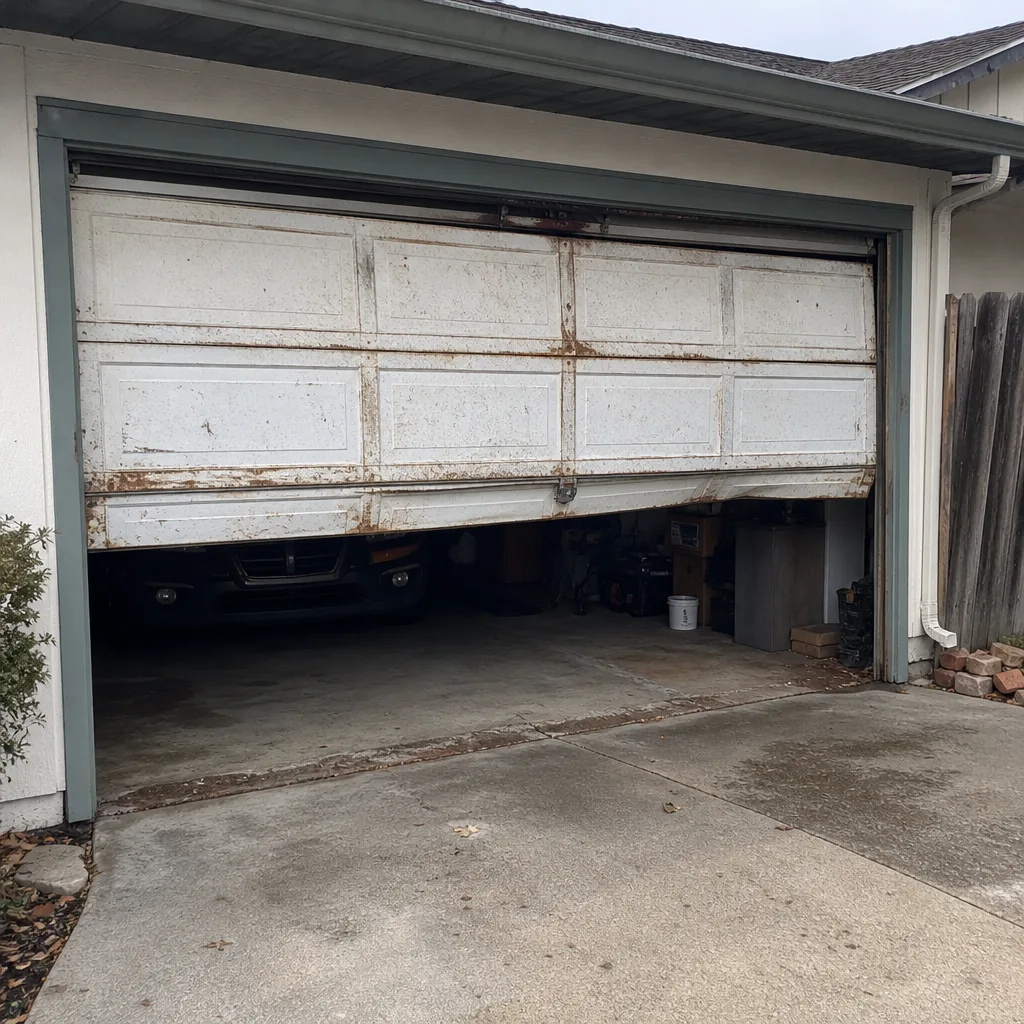 Before
 After
 Before
 After
 Before
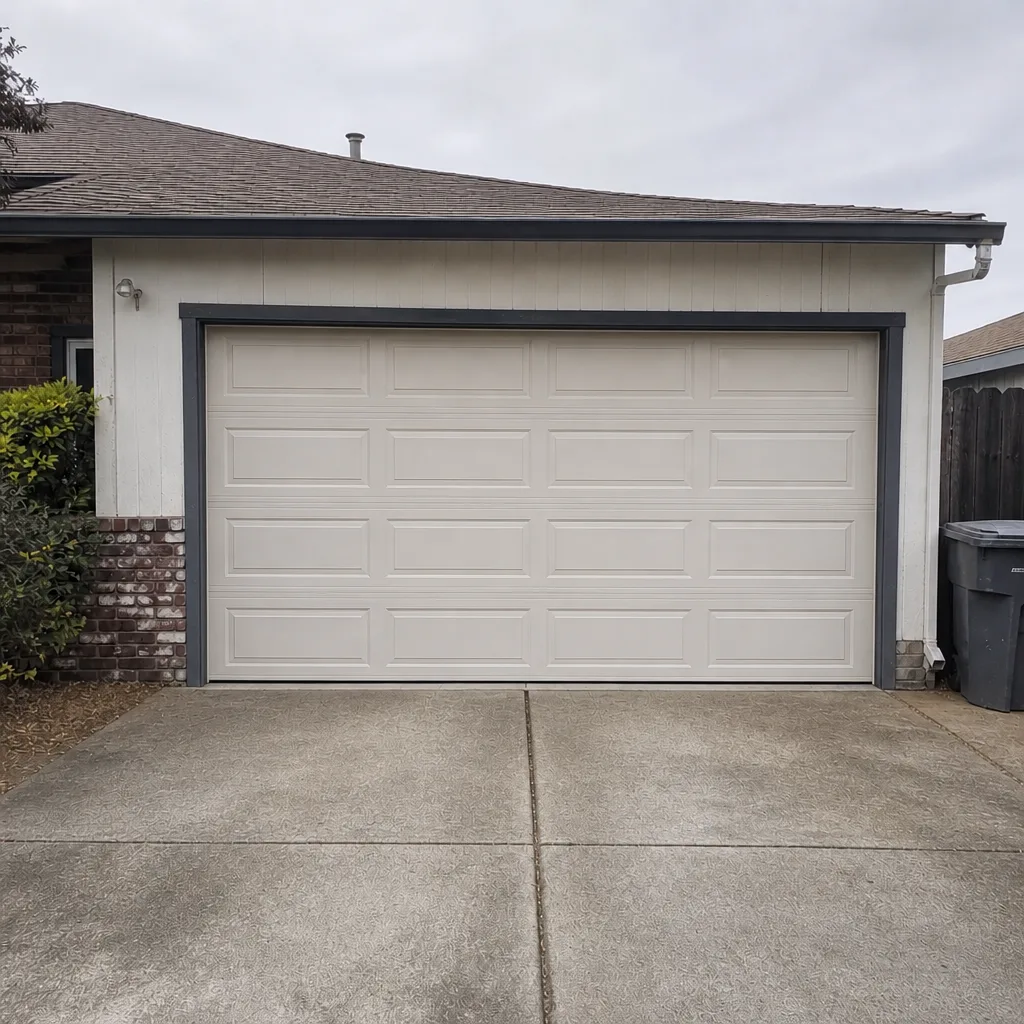 After
When to Call a Professional
Call a professional if you see any sign of cable fraying, if the door is visibly crooked or drags on one side, or if the opener has started running longer to complete a cycle. Those three are our override triggers, and they warrant a same-day inspection. Call sooner if any of these is combined with a door that won’t move: a jammed door with a strained opener deserves a professional look rather than repeated attempts to force it. A yearly professional service also covers everything a walkthrough can’t – force settings, travel limits, spring condition, and roller life. If you’re in Vacaville and the door’s history is unknown, start with a free estimate and a full inspection. Calloway Garage Door Repair offers free estimates in Vacaville. Call (855) 922-3585. We answer 24/7, and fast dispatch runs from 7am to 7pm, Sunday through Friday.
Frequently Asked Questions
Once a year is the standard, and it covers the adjustments a homeowner can’t safely make – spring condition, cable tension, force settings, and travel limits. A yearly visit also gives your maintenance log a professional entry, which matters if a warranty claim comes up later. If your door is used heavily or the opener is running longer than usual, a second visit is worth considering.
The cables. Fraying on a cable is the failure mode that turns a routine repair into an expensive one, and it’s visible without tools. Stand to the side of the door and look at each cable for broken strands, kinks, or rust. Do this monthly. In our experience, most cable problems are caught early enough that replacement is straightforward, and that’s the goal.
No. Torsion springs are the most dangerous component on a garage door – they store enough energy to cause serious injury. A garage door spring replacement belongs with a trained technician. The same goes for cables and the spring winding drums. If you suspect a spring is failing, stop using the door and call a professional.
Yes, mostly in timing. Summer heat is the reason to do heavier spring lubrication before the season, and fall is when a full balance and tension check makes sense, because cooling air causes the mechanism to tighten. There’s no ice or snow here, so freeze-related checks don’t apply. The dry season also makes monthly track cleaning more worthwhile, since dust settles on the tracks faster than in more humid climates.
It’s a sign to get it diagnosed, and it’s usually cheaper to address sooner than later. A longer opener cycle usually means the door is working against something – a stiff spring, a binding roller, a misaligned track, or the start of an opener failure. Running it longer than usual compounds the strain on both the opener and the door. Call for an inspection before it fails outright.
A typical torsion spring is rated at about 10,000 cycles, which for a household that opens and closes the door around four times a day usually means several years of service. The exact life depends on door weight, usage, and how well the spring is lubricated. When one spring at the end of its rated life is replaced, the standard approach is to replace the pair together, since the second spring has the same cycle count.
The Bottom Line
A garage door maintenance schedule is a rhythm, not a checklist. The monthly ten-minute walkthrough catches wear early. Lubrication every three to four months, weighted toward late spring before the heat arrives, prevents the flat spots and friction that lead to bigger repairs. A fall balance check catches the tension problems that a cold morning would otherwise reveal. And while it’s tempting to treat the maintenance visit as optional, the annual professional service and the maintenance log together protect your door and your warranty. Fraying cables, a crooked door, or a strained opener all bypass the calendar and call for a professional look. If any of those sound familiar, Calloway Garage Door Repair offers free estimates in Vacaville – call (855) 922-3585 for a straight answer on whether to repair or replace. We answer 24/7, with fast dispatch from 7am to 7pm, Sunday through Friday. If you’d like to see the full scope of what we handle, take a look at our garage door repair services.
Written by the team at Calloway Garage Door Repair.