
Last updated November 16, 2026
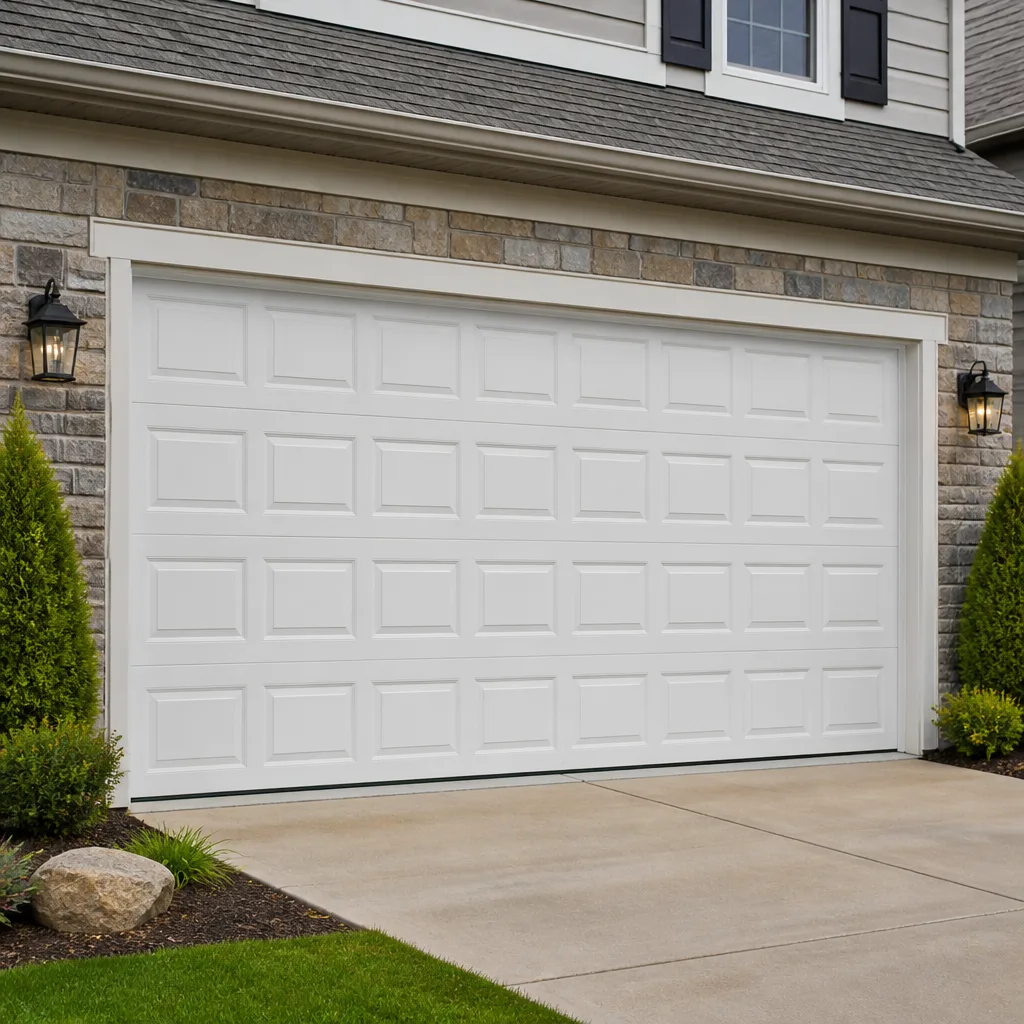 Raised-panel steel
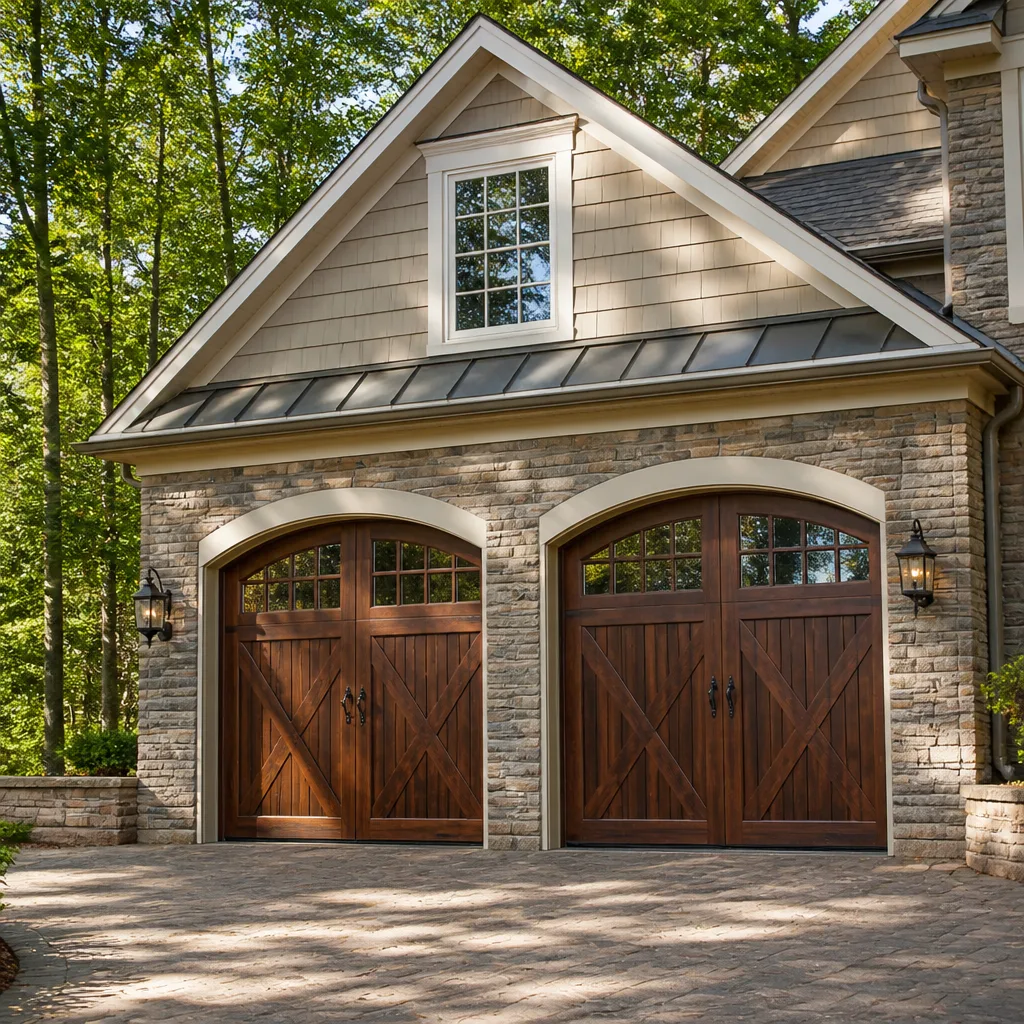 Carriage house
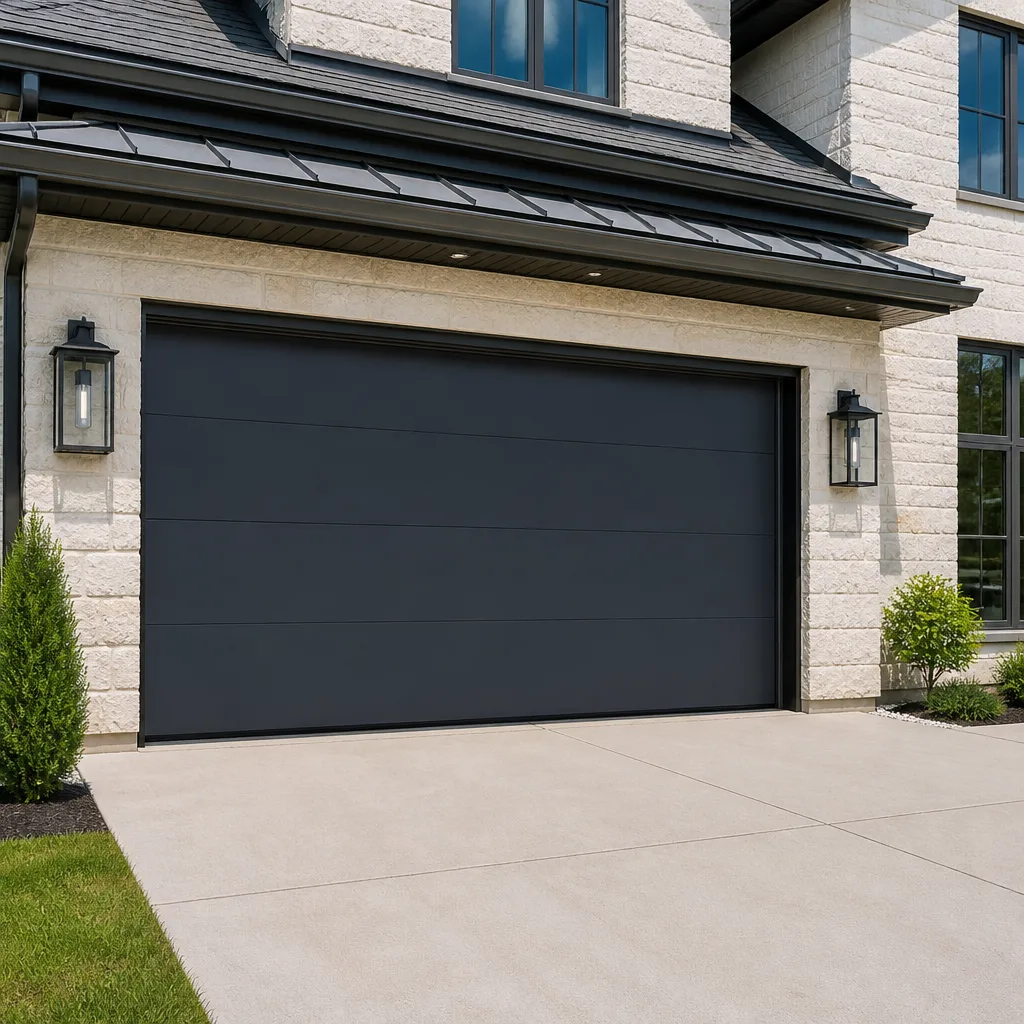 Modern flush
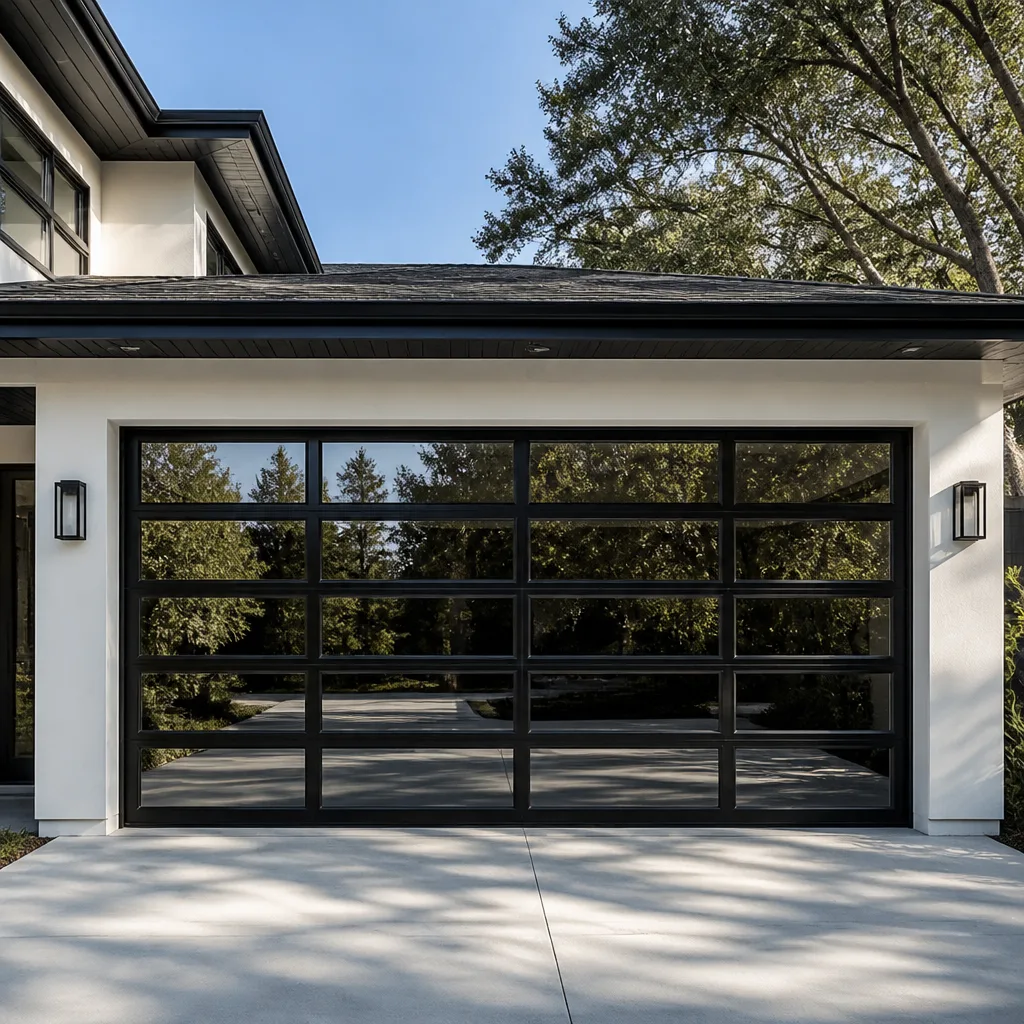 Full-view glass
 LiftMaster openers
 Chamberlain openers
Full 25-point door and opener safety check with every visit - springs, cables, rollers, tracks, and your LiftMaster or Chamberlain opener included
You get a price before we start. It does not change when the pro arrives.
Get your free estimateHow to Hire a Garage Door Contractor in Vacaville: A Step-by-Step Guide
The cheapest quote you get in Vacaville for garage door work often doesn’t come from a garage door company at all. It comes from a handyman with a truck, a ladder, and a price that undercuts everyone else by a comfortable margin. Sometimes that works out fine. Sometimes it ends with a door that binds, an opener that fails three months later, and nobody answering the phone. The difference between a contractor who’ll stand behind the work and one who won’t usually isn’t the price – it’s what you asked before you booked. This guide walks you through the screening process step by step: license checks, parts questions, reading a quote line by line, spotting out-of-area outfits that rank locally but subcontract the work, and understanding why one specialist handling the door, the opener, and installation keeps you from chasing down two or three vendors when something goes wrong in Vacaville.
Quick Answer
To hire a garage door contractor in Vacaville, verify the contractor’s California license classification (C-61/D-28) on the CSLB database, ask whether they use OEM or aftermarket parts, get a written itemized quote with labor and disposal broken out, and confirm the company is a true garage door specialist rather than a general handyman. Ask specifically who will show up on the day of service and whether that person is an employee or a subcontractor. If the answers feel vague, that’s your answer.
Styles & brands we work with
- Raised-panel steel
- Carriage house
- Modern flush
- Full-view glass
- LiftMaster openers
- Chamberlain openers
Table of Contents
- Step 1: Check the License Before Anything Else
- Step 2: Confirm You’re Hiring a Specialist, Not a Generalist
- Step 3: Ask About Parts Sourcing and the Opener Warranty
- Step 4: Spot Out-of-Area Companies That Rank Locally
- Step 5: Read the Quote Line by Line
- Step 6: Keep One Point of Accountability
- Step 7: Ask These Questions Before You Book
- Step 8: Understand Repair vs. Replacement Timing
Step 1: Check the License Before Anything Else
Garage door work in California falls under specific contractor license classifications. A C-61 limited specialty license (the D-28 subcategory covers doors, gates, and activating devices) is the classification that typically applies to garage door installation and repair. A handyman operating without any classification may be legally fine for very small jobs, but the moment the work involves a new door, a spring replacement, or an opener installation, the licensing question matters. It matters because a licensed contractor is required to carry a bond and workers’ compensation coverage if they have employees, and those protections exist for one reason: they protect you if something goes wrong.
Verifying a license takes under two minutes. Use the Contractors State License Board (CSLB) website and have the following ready:
- The company’s exact business name as it appears on the quote.
- The license number, if they provided one proactively.
- The name of any individual they say will perform the work.
Search the name or number. You should see a status of “Active,” the classification codes, and whether the license has any disciplinary actions on file. If the company name on the quote doesn’t match the name on the license, that’s a red flag. If the status reads “Expired” or “Suspended,” walk away.
One subtle thing about Vacaville specifically: because the city sits between Sacramento and the Bay Area, it’s common for contractors from both metros to work here. That’s not automatically a problem. But you still want to verify the license directly, not take someone’s word for it. The CSLB database doesn’t care where a company is based; it only cares about status. Use it.
Step 2: Confirm You’re Hiring a Specialist, Not a Generalist
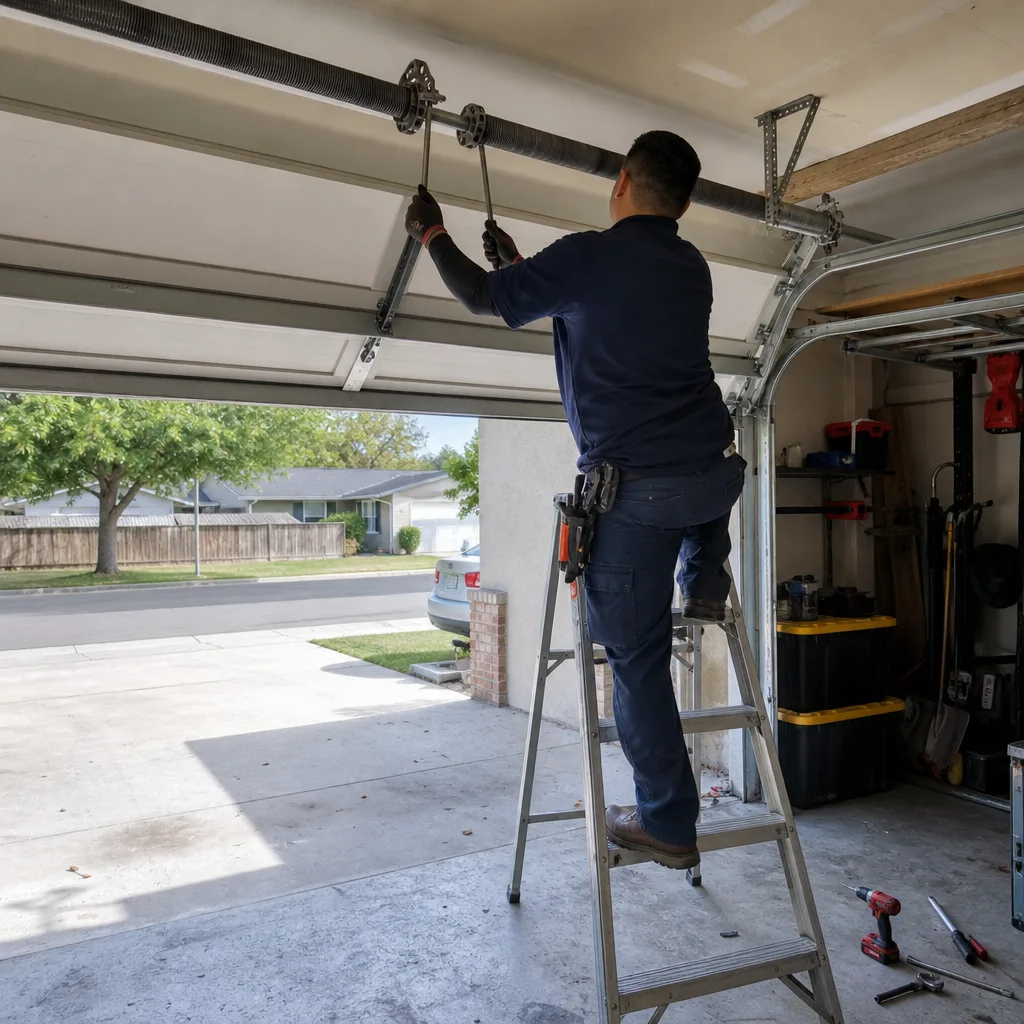
Garage doors look simple from the outside. A big panel that goes up and comes down. But the system underneath – springs, cables, hinges, rollers, tracks, sensors, and the opener that drives it – involves tension and moving parts that require specific training to service safely. A general handyman may be excellent at drywall and trim and still have no business adjusting a torsion spring.
When you’re screening contractors in Vacaville, ask one question directly: “Is garage door work the only thing your company does?” The answer tells you a lot.
- Specialists handle garage door repair, opener repair, and installation as their core business. They know the brand-specific quirks of a Wayne Dalton idrive versus a standard LiftMaster belt-drive.
- General handymen spread across many trades. They may have done garage doors before, but the depth of brand familiarity is limited.
- Big-box installers often subcontract the actual install to whoever is available in the area. You may not know who’s coming until the morning of.
We’re biased, but the pattern holds: a dedicated specialist can tell you within minutes whether a problem is a $150 sensor alignment or a spring replacement that needs the door taken out of service. A jack-of-all-trades will often guess. And guessing on a garage door is expensive when the guess is wrong. (If you want to know what specific problems look like, our garage door repair page walks through the common failure points.)
Step 3: Ask About Parts Sourcing and the Opener Warranty
Parts sourcing is the question almost nobody asks, and it’s the one that most often leads to unpleasant surprises down the road. There are two broad categories: OEM (original equipment manufacturer) parts, and aftermarket equivalents. Both can work. But there’s a critical distinction when it comes to openers.
If your opener is under warranty – and most LiftMaster, Chamberlain, Genie, and Craftsman openers carry multi-year warranties on the motor and logic board – installing aftermarket parts during a repair can void that warranty. Manufacturer warranties typically require approved replacement parts. So if you’re looking at an opener repair on equipment that’s still under warranty, ask the contractor to confirm the replacement parts meet the manufacturer’s warranty requirements.
Here’s what to ask:
- Are the replacement parts OEM or aftermarket?
- If aftermarket, do they meet the manufacturer’s warranty requirements?
- Will this repair affect my existing manufacturer warranty?
- Do you have the part on hand, or does it need to be ordered? (This matters on older or less-common models.)
For door brands like Amarr, Clopay, or Raynor, the panel and hardware side of the sourcing question is a bit different – warranty coverage is typically about the original door, and repair parts that match the door’s original specification are the goal. A good contractor can tell you which parts are compatible with the model on your door before ordering.
If you’ve got a LiftMaster or Craftsman opener that’s acting up and you want to know what repair looks like, our garage door opener repair page covers the diagnostic side in more detail.
Step 4: Spot Out-of-Area Companies That Rank Locally
Search for garage door repair in Vacaville and you’ll see a mix of results. Some are genuine local specialists. Others are lead-generation sites or out-of-area companies that optimize for Vacaville in search engines but don’t have any actual presence here. They collect the call and then dispatch whichever subcontractor is available in the area.
That model isn’t automatically bad. But it does mean you might not know who’s coming until they knock on your door, and accountability is diluted – if something goes wrong, you’re dealing with a call center, not the person who did the work.
How to tell before you book:
- Ask for the physical service address. A real local operator can give you one. If they can only give you a P.O. box or won’t answer at all, that’s a signal.
- Ask who will perform the work. If the answer is “a technician” with no more detail, press. Is the technician an employee of the company, or a subcontractor?
- Search the business name on Google Maps. Established local operators have reviews tied to an address or service area. Lead-gen sites often have only a website.
- Read the fine print on the quote. If the company name on the quote is different from the name you called, or if there’s a “serviced by” line for another entity, dig deeper.
- Call the number and ask a technical question. A specialist will answer questions about LiftMaster vs. Wayne Dalton systems fluently. A call center will transfer you or read from a script.
None of this is about geography for its own sake. It’s about knowing who’s actually going to show up at your house and be accountable for the work. In Vacaville’s market, where East Bay and Sacramento companies both reach, that clarity matters.
Step 5: Read the Quote Line by Line
A quote sheet is where contractors separate themselves. A vague quote – “spring replacement, $X” – is an invitation for the final bill to look different from the original number. A specific quote breaks down what’s included, what isn’t, and what the final price will be if everything goes as planned. Here’s what to look for:
- “Labor included” usually means the labor for the described job is part of the quoted price. It does NOT typically include discovering a second unrelated problem mid-job (say, a bent track you didn’t know about). Ask specifically what happens to the price if the job reveals additional work.
- Disposal fees should cover removal and haul-away of the old door or old parts. Confirm this in writing. Some quotes bury disposal in a general “miscellaneous” line, which can grow.
- Parts vs. full system matters. A quote for one spring is not the same as a quote for a matched pair of springs. A matched pair almost always costs about twice the single-spring figure because the springs are replaced together as a set.
- Opener programming and remotes. Confirm whether the quoted price includes reprogramming any existing remotes or keypads, particularly on a new opener install.
- Sensor and safety equipment. Any installation quote should confirm that new safety sensors and the required reverse mechanism are included, not billed separately after the fact.
- Written vs. verbal. No verbal numbers. Every dollar figure you’re told should appear on a written quote that’s agreed before work starts.
One more line item to check: ask whether the quote includes the manufacturer warranty registration. Some manufacturers require the installer to register the door or opener to activate the full warranty. If the contractor doesn’t do it, you may need to. Get it in writing.
Step 6: Keep One Point of Accountability
The biggest hidden cost in garage door work isn’t the door – it’s the coordination. If you hire one contractor to install your door and a separate company to install the opener, and then a third to fix the sensor that’s out of alignment, you’re building in three points of failure. If a sensor issue shows up after the opener install, the opener company says it’s the door, the door company says it’s the opener, and you’re stuck in the middle.
The clean answer is to hire one specialist that handles all three service categories: repair, opener repair, and installation. That’s what we do at Calloway. It means that when something goes wrong after an install, there’s only one number to call. It also means the person assessing whether to repair or replace is the same person who did the original work, and they’re not guessing.
We work on equipment from eight of the most commonly installed brands – LiftMaster, Chamberlain, Genie, Clopay, Amarr, Wayne Dalton, Craftsman, and Raynor – which means we’re not pushing one brand because that’s what’s on the truck. The recommendation is based on the door you have.
If a repair will fix it, we’ll say so. If replacement makes more sense over the next few years, we’ll say that too, and explain why. That’s a lot easier to trust when the same company sells both the repair and the new door, because we don’t have a reason to push either one. For more on that side of the business, see how Calloway Garage Door Repair handles the full scope.
Step 7: Ask These Questions Before You Book
Every screening conversation should end with the same set of questions. If the contractor answers them confidently and in specific terms, that’s a good sign. Vague or evasive answers are your warning. Number them so you can ask them one by one:
- What is your CSLB license number? And the classification? (You should hear C-61/D-28 or similar.)
- Is the crew you’re sending a direct employee, or a subcontractor? And will the same person do the work under the same warranty?
- What brands do you work on regularly? A specialist should list brand names without missing a beat – LiftMaster, Chamberlain, Clopay, Amarr, and so on. A handyman usually says “all of them.”
- Do you use OEM parts? If not, will the aftermarket parts affect my warranty?
- Is the price quoted before work starts? The answer should be an unqualified yes, with a written quote you can keep.
- Is the estimate free? The estimate should be, every time. No trip charges, no diagnostic fees, no fees “credited toward the repair.” If someone quotes you a fee just to show up, walk.
- What happens if the initial diagnosis was wrong and more work is needed? A good contractor explains this before starting, not after.
If you’re working through this checklist yourself and want to run any of the answers by a specialist, we’re happy to talk. Our technicians have up to 13 years of experience and can answer brand-specific questions off the top of their heads. Call (855) 922-3585. We answer 24/7. Fast dispatch from 7am to 7pm, Sunday through Friday.
Step 8: Understand Repair vs. Replacement Timing
One question that comes up constantly in Vacaville: is this a repair job or a replacement job? The answer depends on the door’s age, the type of problem, and how many components are failing at once. Repair is the right call when the problem is isolated and the door’s structural core (panels, track, hinges) is sound. Replacement makes more sense when several systems are failing at once and the cumulative cost of repairs approaches the cost of a new door.
Some guidelines:
- Single component failure (one spring, one roller, one sensor) is almost always a repair.
- Multiple components failing in a short window suggests the door is nearing the end of its service life. That’s when replacement is worth pricing out.
- Opener issue with a functional door is usually an opener repair, not a door replacement.
- Door issue with a functional opener is usually a door repair.
- Cosmetic issues on a sound door (dents, faded finish) can often be handled with panel replacement rather than a full new door – talk to a specialist about which parts are compatible with your door model.
One more thing worth knowing about the Vacaville climate: winters here are mild. That’s good news for garage doors. The climate doesn’t put heavy seasonal stress on the hardware the way harsher environments do, so a well-installed door typically lasts longer here than its nominal service life would suggest. Doors that fail early usually have an installation or hardware issue, not an environmental one. If you’re not sure which side of the repair-vs-replace line you’re on, call us for a free estimate and we’ll tell you honestly which one makes sense.
Common Mistakes to Avoid
- Hiring the lowest bid without checking the license. The cheapest quote often belongs to a handyman who can’t legally perform the work, won’t be bonded, and won’t have any warranty backing if something goes wrong. The savings disappear rapidly when you have to pay a real contractor to fix it.
- Accepting a verbal quote. A verbal number can change between the call and the invoice. Only a written quote, agreed before work starts, protects you from the surprise-bill scenario. This is the single biggest source of homeowner complaints in this trade.
- Assuming the brand on the door and the brand on the opener are the same. Many homes in Vacaville have a mix: a Clopay door with a LiftMaster opener, or a Wayne Dalton door with a Craftsman opener. Confirm that whoever you hire handles both brands, not just one.
- Ignoring the aftermarket-parts warranty question. A cheap aftermarket replacement part can void the remaining warranty on a $400+ opener. Ask before the work starts, not after.
- Calling a company that turned out to be a lead-generation site. If they can’t tell you who’s coming or where the crew is based, they’re booking you out to a subcontractor. You may get a great tech, or you may get one who’s never seen your door model. You don’t need that uncertainty for a job on your home.
- Letting a handyman handle a spring or cable job. High-tension garage door springs and cables are genuinely dangerous. They store enough energy to cause serious injury if handled incorrectly. This is one category of work that should always go to a trained garage door technician, even if the price is higher.
- Booking installation without a walk-through first. Installation requires measuring, confirming the model, and ordering the door. It’s not a same-day job. Get a free measure and a written price, and expect a scheduled install date.
See the difference
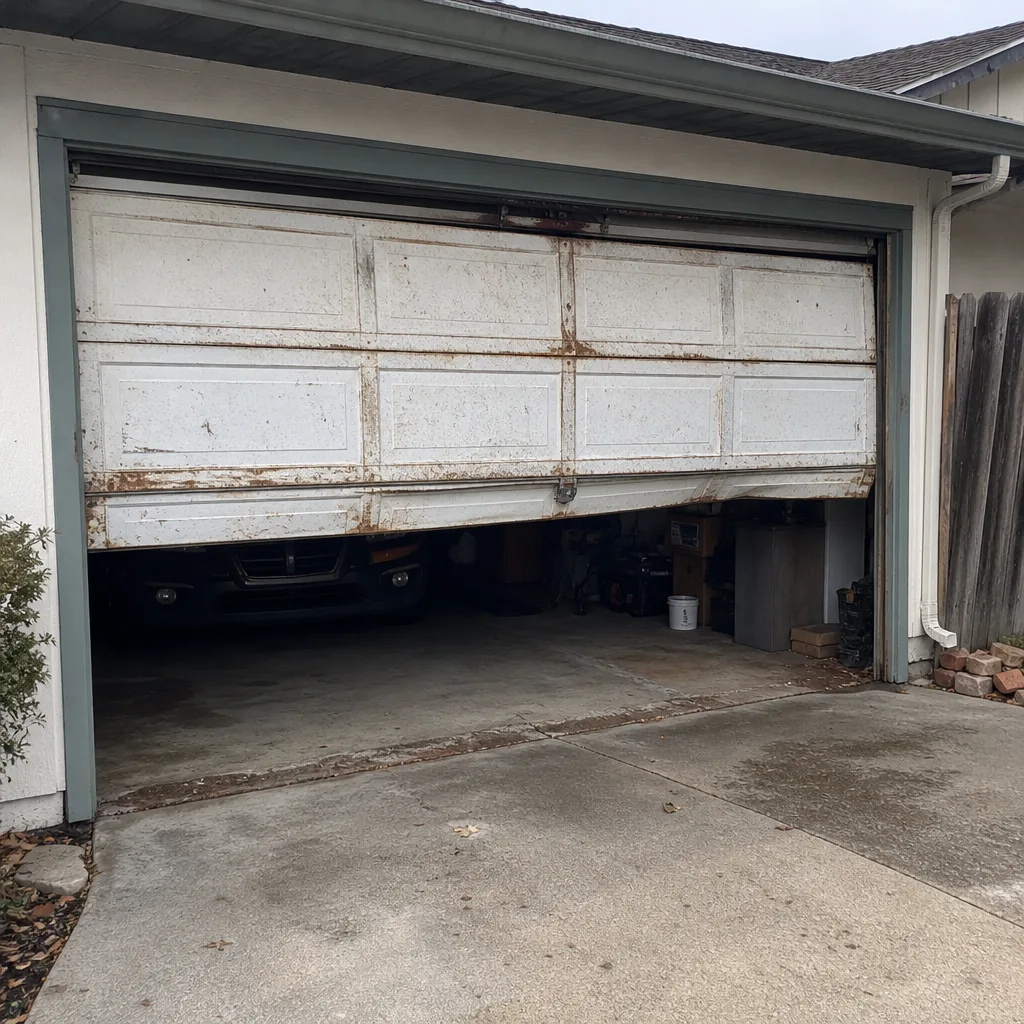 Before
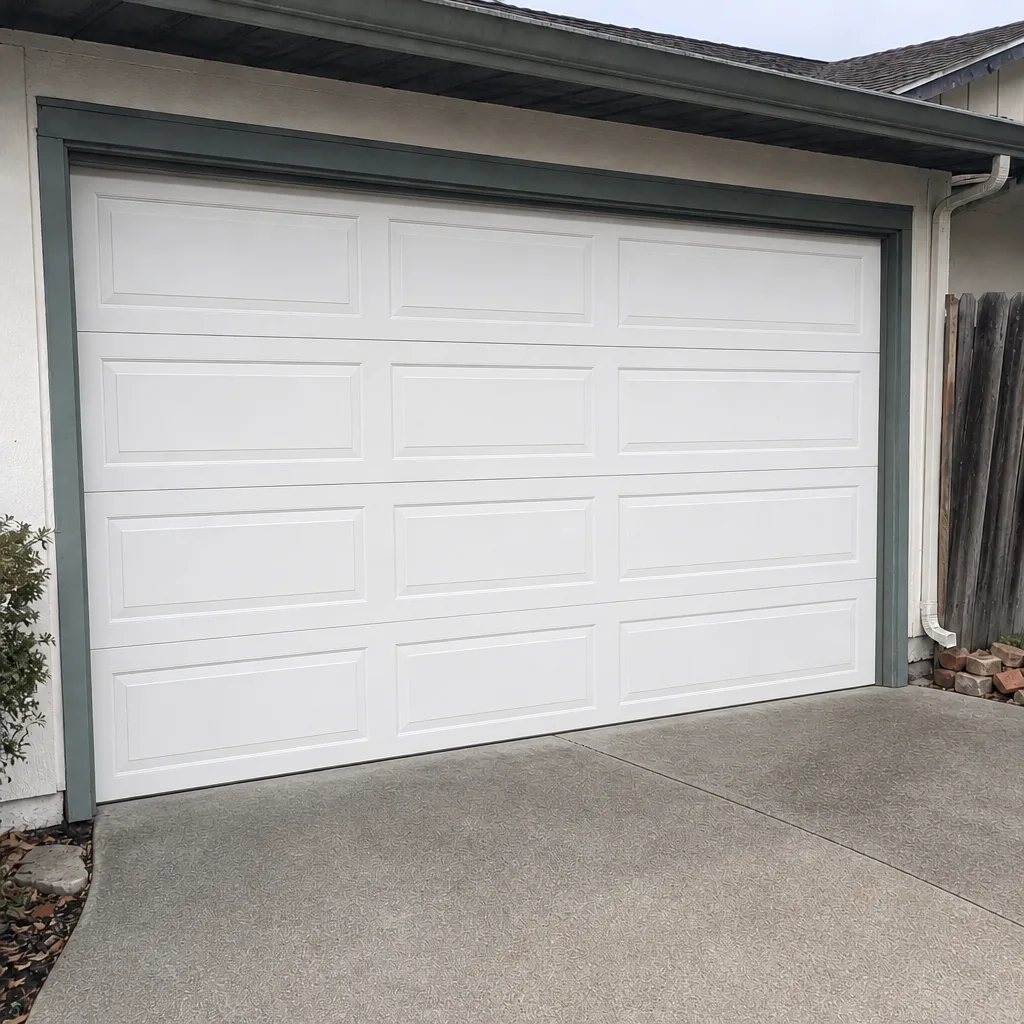 After
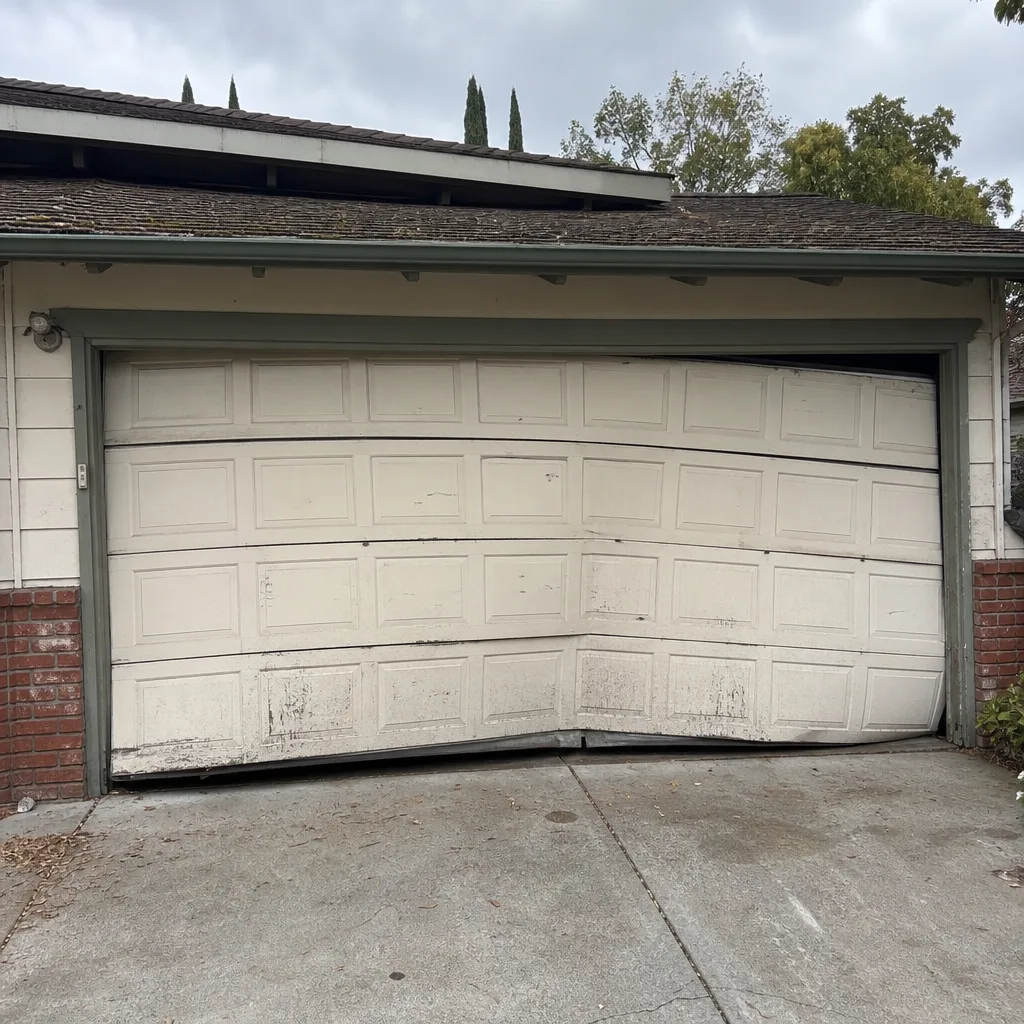 Before
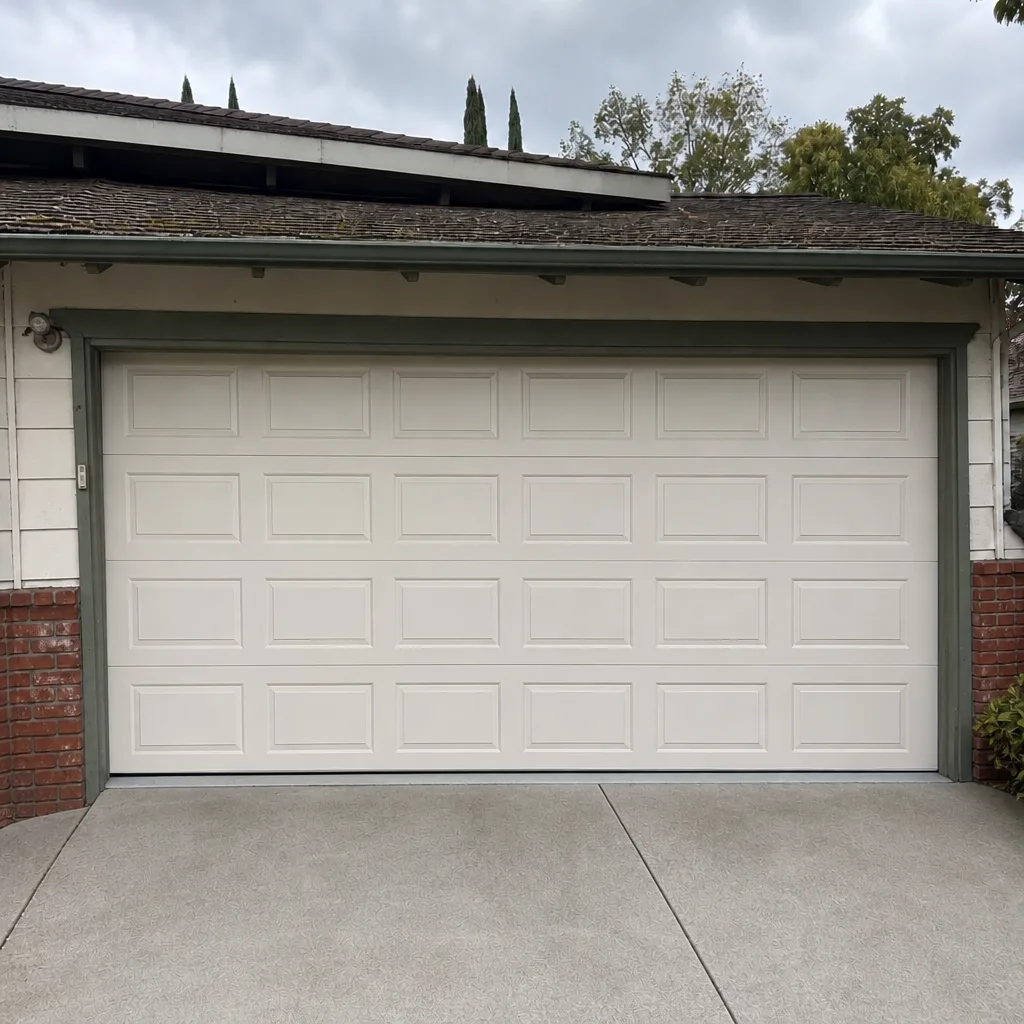 After
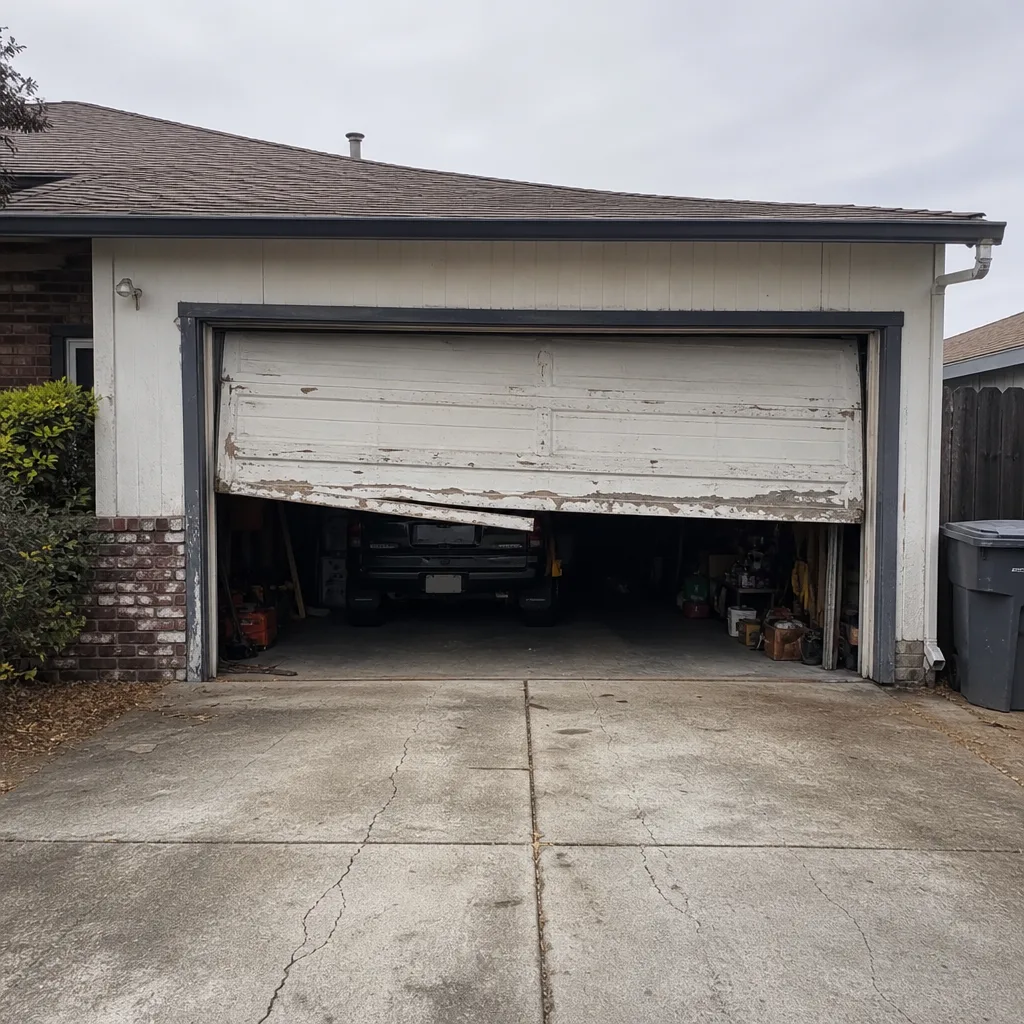 Before
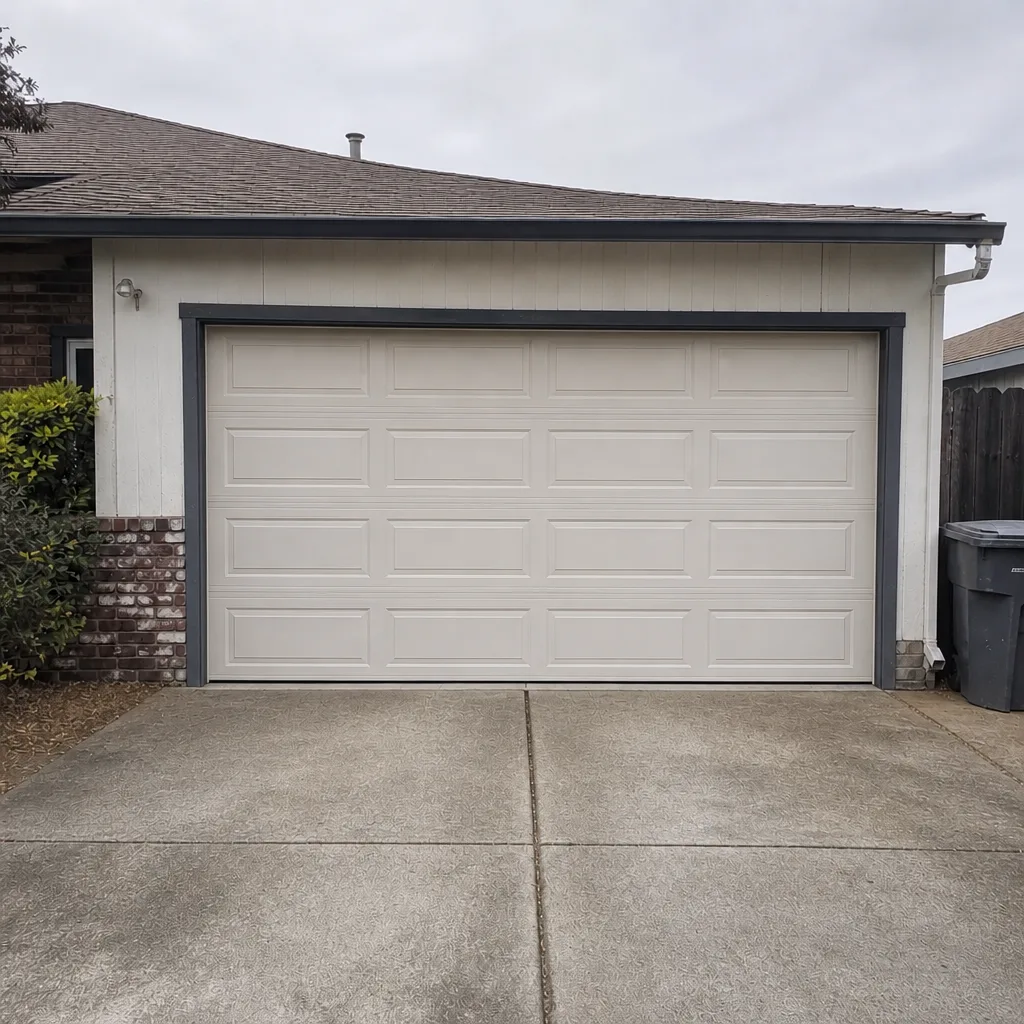 After
When to Call a Professional
Some garage door issues are worth calling a pro for immediately, without waiting to see if they resolve. A broken torsion spring (you’ll hear a loud pop and the door won’t lift), a door that’s come off its track, a snapped cable, a door that reverses on its own before fully closing, and a visually damaged panel that’s affecting the door’s structural integrity all warrant a call. So does any job involving wiring inside the opener, safety sensors that won’t align no matter what you try, or the spring system itself. These are areas where a trained technician’s experience matters, and where a DIY attempt can cause injury or make the repair more expensive. For an honest assessment, Calloway Garage Door Repair offers free estimates in Vacaville – call (855) 922-3585. We answer 24/7. A call outside dispatch hours is booked into the next opening, Sunday through Friday, 7am to 7pm.
Frequently Asked Questions
Use the CSLB (Contractors State License Board) website and search for the business name or license number as it appears on your quote. Look for an active status, the correct classification (C-61/D-28 is common for garage door work), and no disciplinary actions on file. The check takes about two minutes and is the single most valuable screening step you can take before booking.
A garage door specialist handles garage doors, openers, and installation as their core business; a handyman spreads across many trades. The practical difference shows up in brand fluency (whether they know the specifics of a LiftMaster or Wayne Dalton system) and in warranty accountability (whether they stand behind the repair in writing). When you’re choosing between them, ask which brands they work on regularly. A specialist answers without hesitation. For more on what to expect from a specialist, see Vacaville.
Possibly, but you need to ask two questions first: who is actually performing the work, and is the person an employee or a subcontractor? Some out-of-area companies are excellent and just have a wider service area. Others are lead-generation operations that dispatch whoever is available. If the company can’t tell you who’s coming to your home, or won’t confirm whether the tech is an employee, that’s the answer.
It shouldn’t, if the quote is written and the scope of work is described clearly. The price should be quoted and agreed before any work starts. That’s why reading the quote line by line matters: “labor included” should be examined, disposal should be spelled out, and any assumptions about the condition of the door or opener should be in writing. If something surfaces mid-job, a reputable contractor will stop and get your approval before proceeding with additional work.
For a straightforward sensor alignment or simple part swap, a licensed handyman can do fine work. The reason to call a specialist is that once the tech is on site, they can also check the springs, cables, opener motor, and rollers in a single visit – catching a problem before it turns into a bigger repair. For anything involving springs, cables, or the opener motor itself, a specialist is the right call.
No. Installation is a scheduled job, not a same-day one. We measure the opening, confirm the model and opener compatibility, and schedule the install once parts arrive. The free estimate covers the measure and the written price. From there, you’ll have a clear install date and a price you’ve already agreed to in writing.
The Bottom Line
Hiring a garage door contractor in Vacaville comes down to six checks: verify the CSLB license, confirm you’re hiring a specialist rather than a generalist, ask about OEM parts and warranty implications, spot the out-of-area lead-gen outfits, read the quote line by line (labor, disposal, parts, sensors), and keep one point of accountability for the door, the opener, and the install. Do those six things and you’ll filter out most of the bad hires. Skip them and you’re relying on the contractor’s honesty in the moment, which is exactly the thing you’re trying to assess. Get a free estimate, get a written quote, and don’t start work until the two match.
If you’re ready to get a straight answer on your door or opener, Calloway Garage Door Repair is a phone call away. We handle repair, opener repair, and installation as one specialist service, and we work on the brands that are actually in your home. Call (855) 922-3585 for a free estimate. We answer 24/7. Fast dispatch from 7am to 7pm, Sunday through Friday.
Written by the team at Calloway Garage Door Repair.